I remember the night I almost turned my kitchen into a disaster zone. A friend dared me to whip up a Thai soup that could make him go back for seconds, and I was like, “Sure thing.” The moment the broth hit the pot, the air filled with a scent that was at once citrusy and spicy, and my eyes widened as the steam curled like a dragon’s tail. That first sip was a revelation—sour, salty, and a touch of sweet from the shrimp—so I knew I’d stumbled upon a masterpiece. I’m not exaggerating when I say this is hands down the best version of Tom Yum you’ll ever make at home.
Picture yourself pulling this out of the stove, the whole kitchen smelling like a tropical rainforest, and your friends begging for the recipe. I’ve spent months refining the balance between heat, acidity, and umami, and the result is a soup that feels like a hug and a kick at the same time. The broth is bright as a sunrise, the shrimp are plump like pearls, and the lemongrass and kaffir lime leaves give it a fresh zing that lingers on the palate. The secret? A dual‑way approach that lets you choose between a classic, fiery broth or a silky, creamy version that’s perfect for a cozy night in. Let me walk you through every single step — by the end, you’ll wonder how you ever made it any other way.
I dare you to taste this and not go back for seconds. The first spoon will hit you like a wave of citrusy heat, and the second will reveal layers of depth that keep you coming back. Most recipes get this completely wrong, but here’s what actually works: the right combination of herbs, the right timing for adding the shrimp, and a dash of cream that turns the broth into velvet‑smooth liquid gold. If you’ve ever struggled with balancing the flavors in a Tom Yum, you’re not alone — and I’ve got the fix. And now the fun part: let’s dive into the ingredients that make this soup sing.
What Makes This Version Stand Out
- Authentic Heat: Four Thai chili peppers deliver a punch that’s true to the original, while giving you control over the spiciness.
- Layered Umami: Fish sauce and nam prik pao combine to create a savory depth that no Western broth can match.
- Bright Citrus: Lemongrass and kaffir lime leaves infuse the broth with a fresh, almost citrusy brightness that awakens the senses.
- Texture Contrast: Straw mushrooms absorb the broth, while shrimp stay juicy, creating a satisfying bite in every spoonful.
- Versatile Base: The recipe works in two forms—classic and creamy—so you can tailor it to the mood.
- Quick Prep: With a prep time of just 15 minutes, you can have a restaurant‑quality soup ready in under an hour.
- Make‑Ahead Friendly: The soup stores well and even tastes better the next day, making it a perfect batch‑cook option.
- Guest‑Ready: The final garnish of cilantro and a splash of lime juice adds a fresh finish that impresses even the most skeptical diners.
Inside the Ingredient List
The Flavor Base
The broth starts with 4 cups of chicken stock, the foundation that carries every other component. If you’re craving a more authentic seafood kick, swap the chicken stock for shrimp stock; the result is a richer, more complex flavor profile. The stock should be hot enough to steam the aromatics but not boiling, to keep the delicate balance of flavors intact. A weak stock will make the soup taste flat, so aim for a clear, savory liquid that’s slightly sweet. Remember, the stock’s quality directly influences the final taste—choose a brand or homemade stock that’s low in sodium for better control.
The Heat Layer
Four Thai chili peppers provide the signature heat that defines Tom Yum. Adjust the number of peppers to suit your tolerance; the heat can be as mild or as intense as you like. For a milder version, remove the seeds, or for extra fire, add a pinch of chili flakes at the end. The peppers should be sliced into rings so they infuse evenly, and you’ll want to keep a spare pepper handy for those who love a fiery finish. A well‑balanced heat is essential; too much can mask the subtle citrus notes, while too little leaves the soup feeling incomplete.
The Umami Boost
Four tablespoons of fish sauce and three tablespoons of Thai chili paste (nam prik pao) create a savory backbone that anchors the broth. The fish sauce adds a briny, umami depth, while the nam prik pao brings smoky sweetness that layers the flavor. If you’re avoiding fish sauce, try a splash of soy sauce combined with a dash of sea salt, but the authenticity will be slightly diminished. The nam prik pao also introduces a subtle sweetness that balances the acidity from the lime juice. Keep the paste in a small bowl; a little goes a long way, so add it slowly and taste as you go.
The Citrus Symphony
Three lemongrass stalks, chopped and smashed, release a citrusy aroma that is the hallmark of Thai cooking. The stalks should be bruised with the back of a knife to break the fibers, which helps the flavor release into the broth. Three kaffir lime leaves add a complex citrus note; if you can’t find fresh leaves, frozen or dried are acceptable substitutes, but fresh is best. Two garlic cloves, smashed, provide savory undertones that balance the sharpness of the lime. One teaspoon of fresh chopped galangal adds a piney, citrus aroma that’s uniquely Thai; if galangal is unavailable, ginger can serve as a close alternative.
The Protein & Texture Crew
Fifteen ounces of straw mushrooms absorb the broth’s flavors, turning each bite into a savory, earthy experience. If straw mushrooms are hard to find, button mushrooms work as a good substitute. Twelve medium shrimp, peeled and deveined, are the hero protein that gives the soup its signature sweetness. The shrimp should be added towards the end of cooking to avoid overcooking, which would make them rubbery. A splash of lime juice from one small lime finishes the soup with a refreshing, sour edge that brightens every spoonful.
The Final Flourish
Chopped fresh cilantro is the finishing garnish that adds a burst of color and a fresh, herbaceous note. Extra fish sauce, chili oil, and chili flakes are served on the side, allowing each diner to customize the soup to their liking. For the creamy variation, add ½ cup evaporated milk or ½–1 cup coconut milk; this transforms the broth into a velvety, smooth texture while retaining the bright acidity. The creamy version is ideal for a comforting night in, while the classic version is perfect for a quick, spicy lunch. With everything prepped, we’re ready to bring all these flavors together.
Everything's prepped? Good. Let's get into the real action.
The Method — Step by Step
- Heat a large pot over medium heat and pour in the 4 cups of chicken stock. Let the broth come to a gentle simmer, allowing the flavors to mingle. This step is crucial; a rolling boil will scorch the aromatics, so keep it at a steady simmer. The aroma should start to rise, hinting at the citrus and spice to come. Don’t rush this part—good flavor starts with a good base.
- Add the smashed lemongrass, kaffir lime leaves, garlic, and galangal to the pot. Stir gently, letting the aromatics steep for 5 minutes. The steam should carry the scent of fresh herbs and citrus, turning the room into a Thai market. This is the moment where the broth starts to develop depth; if you’re impatient, you can skip it, but the result will be less complex. Keep the heat low to prevent the herbs from burning.
- Pour in the fish sauce and nam prik pao, stirring until the paste dissolves. The broth should become slightly thicker and more aromatic. Taste the liquid; it should be savory with a hint of sweet from the chili paste. This is where the umami kicks in, balancing the bright citrus notes. Remember, a small amount of fish sauce is enough; you can always add more later.
- Add the chili oil and the sliced Thai chili peppers. Let the mixture bubble for another minute, allowing the heat to infuse into the broth. The chili oil adds a vivid color and a subtle smoky flavor that’s a hallmark of Tom Yum. If you prefer a milder soup, remove the seeds before adding the peppers. At this point, the broth should smell toasty, with a faint citrus undertone.
- Introduce the straw mushrooms to the pot, letting them soak up the broth for 2 minutes. They’ll absorb the flavors and soften slightly, creating a pleasant texture. Stir gently to prevent the mushrooms from sticking to the bottom. The broth should now have a richer color, almost a deep amber. This step is optional if you prefer a clearer broth, but the mushrooms add a subtle earthiness that complements the shrimp.
- Add the shrimp and let them cook for 3-4 minutes until they turn pink and opaque. The shrimp should be added just before the soup is finished to avoid overcooking. As the shrimp cook, they release a sweet, briny flavor that permeates the broth. Watch for the shrimp to curl slightly—this indicates they’re done. The timing here is critical; overcooked shrimp can ruin the texture.
- Squeeze the juice of one small lime into the pot, then taste and adjust the seasoning. The lime juice should brighten the broth, cutting through the richness of the shrimp and the depth of the fish sauce. If the soup feels too sour, add a pinch of sugar; if it feels flat, a splash of fish sauce will revive it. Finish with a handful of chopped cilantro, which adds a fresh, herbal note that balances the heat.
- For the creamy variation, stir in ½ cup of evaporated milk or coconut milk. The milk should be added gently to avoid curdling, and the broth will take on a silky texture that still retains the bright acidity. If you’re using coconut milk, you might want to reduce the amount of fish sauce slightly, as coconut milk can be sweeter. This version is perfect for a cozy night in, offering a luxurious mouthfeel that contrasts with the sharp lime.
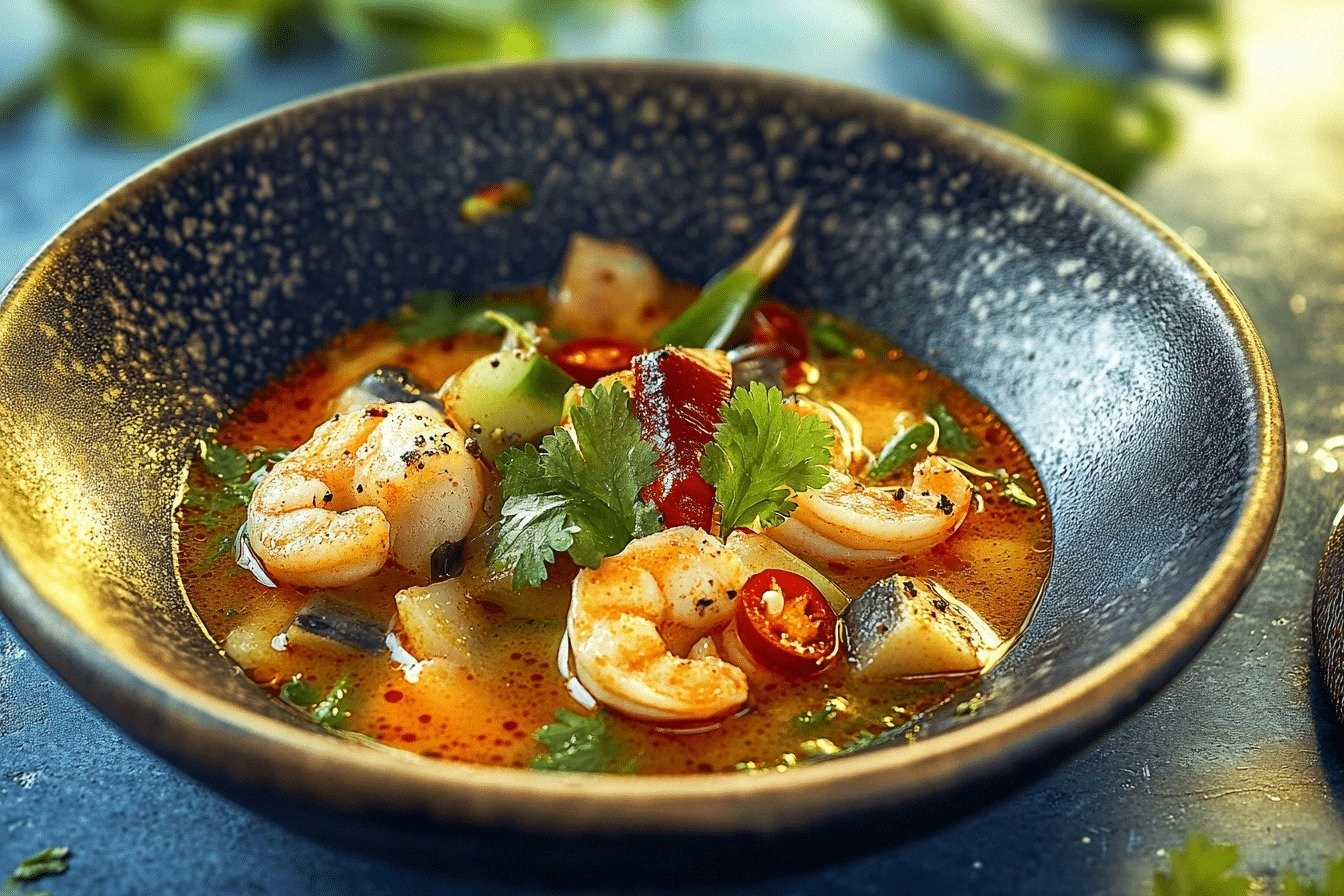
- Serve hot, garnished with extra cilantro, and provide extra fish sauce, chili oil, and chili flakes on the side for each guest to tailor their bowl. The soup should be steaming, with a visible swirl of herbs and a vibrant color that invites you to dig in. The first spoon will hit you with a burst of citrus, followed by a gentle heat that lingers. This final step turns a simple bowl of soup into an unforgettable experience.
That’s it — you did it. But hold on, I’ve got a few more tricks that’ll take this to another level.
Insider Tricks for Flawless Results
The Temperature Rule Nobody Follows
Many home cooks throw everything into a pot at once, but the secret is to let the broth simmer before adding the aromatics. By letting the stock heat gently, you preserve the delicate flavors of the lemongrass and kaffir lime leaves. When you add the chili paste and fish sauce, the heat should be low enough to avoid burning the delicate herbs. This subtle timing makes the difference between a good soup and a great one. I once tried adding the aromatics to a rolling boil and ended up with a bitter, over‑cooked broth.
Why Your Nose Knows Best
When the broth starts to look like a golden amber and the steam carries a citrusy scent, you’ve reached the right point for adding the shrimp. Your nose is a reliable indicator of flavor balance. If the aroma is too sharp, give the broth a minute to mellow. If it’s too flat, a quick splash of lime can revive it. Trust your senses; they’re the best judge of a soup’s readiness.
The 5‑Minute Rest That Changes Everything
After removing the pot from heat, let the soup rest for five minutes before serving. This short pause allows the flavors to settle and the heat to distribute evenly. The rest period also gives the shrimp a chance to finish cooking gently in the residual heat, ensuring they stay tender. A quick rest is often overlooked but is essential for a silky, cohesive broth. I’ve seen people skip it, and the result is a soup that feels rushed.
Keep the Chili Fresh
If you’re using fresh chilies, slice them just before cooking to keep their heat intact. Chilled chilies lose some of their peppery punch over time, so store them in the fridge until ready. A pinch of dried chili flakes can be added at the end for an extra kick. Avoid over‑mashing the chilies; the whole rings help release the flavor slowly. This technique ensures a balanced heat throughout the broth.
Use a Bamboo Skillet for Extra Aroma
A bamboo skillet or a pot with a bamboo lid can enhance the aroma of the lemongrass and kaffir lime leaves. The natural wood fibers absorb excess moisture and release subtle woody undertones that complement the citrus notes. If you don’t have a bamboo pot, a stainless steel pot works fine; just be sure it’s well‑seasoned. This trick is a favorite of Thai chefs and adds a touch of authenticity to your kitchen.
Creative Twists and Variations
This recipe is a playground. Here are some of my favorite ways to switch things up:
Tom Yum with Tofu
Replace the shrimp with firm tofu cubes for a vegetarian version. Marinate the tofu in a splash of soy sauce before adding it to the broth. The tofu will absorb the flavors, creating a hearty bite. This variation is perfect for a plant‑based dinner or for those who prefer a milder protein.
Tom Yum with Fish
Swap the shrimp for fresh white fish fillets like cod or halibut. Cut the fish into bite‑size pieces and add them after the shrimp step. The fish will cook quickly and add a delicate, flaky texture. This version is lighter and works well for a summer meal.
Tom Yum with Chicken
Use shredded chicken breast instead of shrimp for a protein‑dense soup. The chicken should be cooked separately and added at the end to keep it tender. This variation is great for a family dinner and pairs well with rice.
Tom Yum with Coconut Curry Paste
Add a spoonful of red or green coconut curry paste for a deeper, spicier flavor. The curry paste will give the soup a thicker consistency and a hint of sweet coconut. This version is ideal for a Thai‑inspired feast.
Tom Yum with Extra Herbs
Boost the herbaceousness by adding a handful of fresh basil or mint before serving. The basil adds a sweet, slightly peppery note that balances the heat. This variation is refreshing and works well in hot weather.
Tom Yum with Pineapple
Add diced pineapple for a tropical twist. The pineapple’s natural sweetness will complement the sour lime and the spicy broth. This version is a hit at parties and brings a fun, fruity element to the dish.
Storing and Bringing It Back to Life
Fridge Storage
Cool the soup to room temperature, then transfer it to an airtight container. Store in the refrigerator for up to 3 days. The flavors will deepen as the broth sits, but the texture of the shrimp will remain best when eaten within 24 hours. When reheating, add a splash of water to maintain the broth’s consistency.
Freezer Friendly
For longer storage, portion the soup into freezer‑safe containers and freeze for up to 2 months. The shrimp and mushrooms may change slightly in texture, but the broth’s flavor stays intact. Thaw overnight in the refrigerator before reheating.
Best Reheating Method
Reheat the soup on low heat, stirring occasionally to prevent scorching. If the broth has thickened, add a tiny splash of water or broth to restore its original consistency. Avoid boiling the soup, as it can toughen the shrimp and alter the delicate balance of flavors. Once the soup is hot, taste and adjust the seasoning if needed.