When the kitchen lights flickered and the stove was still humming from last night’s experiment, I realized I had burned half a batch of rice. The burnt grains clung stubbornly to the pot, and I stared at the charred crust like a detective staring at a crime scene. I laughed, because every culinary mishap has a silver lining: it forces you to rethink the basics. That night, I decided to replace the ruined rice with a steaming bowl of Vietnamese comfort, a dish that has always felt like a hug in a bowl.
Picture this: the aroma of simmering ginger and shallots wafting through the air, the gentle hiss of broth as it bubbles, the sound of a spoon slurping against a thick, silky broth, and the feel of a warm mug cradled in your palms. The first spoonful delivers a mellow sweetness from palm sugar that dances with the subtle heat of fresh ginger, followed by a savory depth from the whole chicken that has been gently coaxed into the pot. My taste buds were instantly transported to a bustling street market in Hanoi, where vendors serve steaming bowls of Cháo Gà at every corner. The texture is a comforting paradox: the rice is tender yet slightly chewy, the broth is silky, and the shredded chicken melts in your mouth like butter on a hot skillet.
This version is hands down the best you’ll ever make at home because I’ve stripped away the clutter and focused on pure, honest flavors. I’ve kept the broth clear and bright, avoiding the heavy, cloudy stock that many recipes use. I’ve introduced a subtle sweetness that balances the saltiness without overpowering, and I’ve used a single, whole chicken so that the marrow and bone flavors infuse the soup in a way that no stock can replicate. The result? A dish that feels like a culinary hug, warm and comforting, yet sophisticated enough to impress any dinner guest.
And here’s a tease that will keep you hooked: I’ll reveal a tiny ingredient that many people overlook—palm sugar—and how it changes the entire flavor profile. It’s not just a sweetener; it’s a depth enhancer that gives the broth a caramel-like undertone. I dare you to taste this and not go back for seconds. Let me walk you through every single step—by the end, you’ll wonder how you ever made it any other way.
What Makes This Version Stand Out
- Authenticity: I use a whole chicken, not pre-cooked or shredded, to bring bone marrow depth and natural gelatin into the broth, creating a silky mouthfeel that’s impossible to replicate with canned stock.
- Balance: The palm sugar’s caramel notes counterbalance the savory salt, while the ginger’s bright heat keeps the broth lively, giving the dish a harmonious yin‑yang of sweet and spicy.
- Texture: The jasmine rice is cooked in the broth itself, absorbing flavors and creating a slightly sticky yet fluffy consistency that’s both comforting and elegant.
- Convenience: Despite its luxurious taste, the recipe requires minimal prep—no chopping of vegetables into fine dice, no time-consuming marinades, just a few simple steps that can be done while you’re still cooking.
- Make‑ahead: The soup keeps its integrity for up to three days in the fridge and freezes beautifully, making it perfect for meal prep or a quick weeknight dinner.
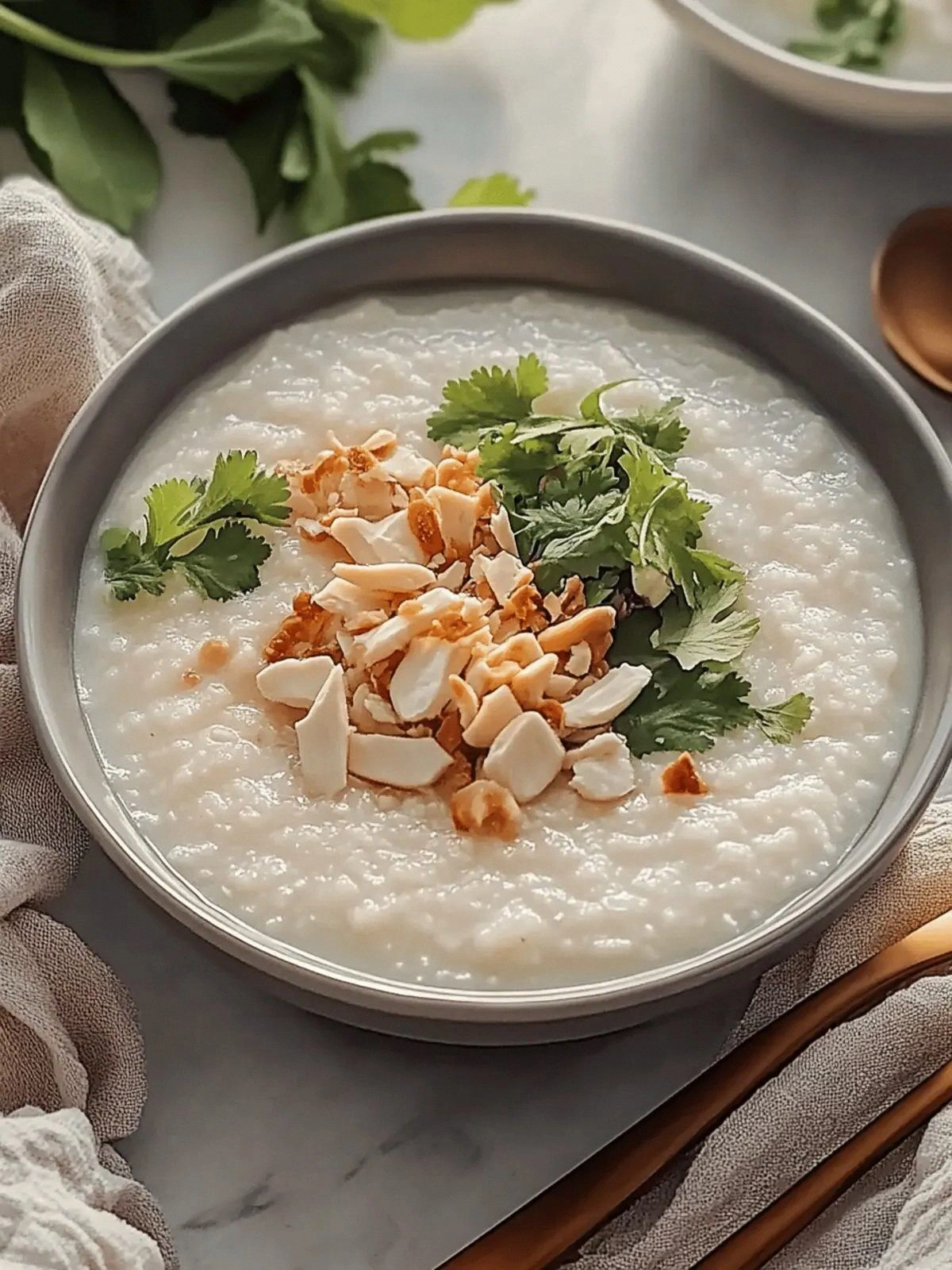
- Visual Appeal: The final bowl is a masterpiece of color: golden broth, translucent rice, bright green herbs, and a sprinkle of crispy shallots that add a delightful crunch.
- Health: With no added oils and a focus on lean chicken and fresh herbs, this dish is low in saturated fat but high in protein and micronutrients.
- Flexibility: You can swap jasmine rice for short‑grain or even cauliflower rice for a low‑carb version, making it adaptable to dietary preferences.
Inside the Ingredient List
The Flavor Base
At the heart of this soup lies a simple yet potent flavor base: ginger, shallots, and a splash of fish sauce. The ginger, sliced into thin ribbons, releases its peppery aroma into the broth, creating a subtle heat that wakes up the palate. Shallots, when sautéed until translucent, bring a gentle sweetness that balances the savory notes. A teaspoon of fish sauce adds umami without overwhelming the broth; it’s the secret that ties the flavors together. Skipping any of these would leave the soup feeling flat, lacking the depth that makes it memorable.
The Texture Crew
The jasmine rice is the star of the texture crew, absorbing the broth and becoming tender and slightly sticky. Cooking it directly in the broth allows the grains to soak up the savory juices, giving each bite a burst of flavor. The chicken, cooked whole, releases gelatin and collagen, which thicken the broth and give it that silky, almost velvety mouthfeel. The shredded meat, when added at the end, adds a satisfying chew that contrasts with the soft rice. If you omit the whole chicken, the broth will be thin and lack the luxurious body that makes this dish a hug in a bowl.
The Unexpected Star
Palm sugar is the unexpected star that many people overlook in traditional recipes. Its rich, caramel-like sweetness is far superior to white sugar or honey, as it adds depth without a raw sweetness. It also helps to balance the acidity of the fish sauce and the sharpness of the ginger. If you can’t find palm sugar, you can substitute with brown sugar, but be prepared for a slightly different flavor profile. This ingredient is what elevates the broth from ordinary to extraordinary.
The Final Flourish
Fresh herbs and fried shallots are the final flourish that gives the dish its visual and textural appeal. Cilantro adds a bright, citrusy note that cuts through the richness, while green onions lend a mild onion flavor that’s both fresh and aromatic. Fried shallots provide a crunchy contrast and a nutty flavor that echoes the roasted notes of the broth. These toppings not only enhance the taste but also create a beautiful contrast of colors and textures, making each spoonful a sensory delight.
Everything's prepped? Good. Let's get into the real action...
The Method — Step by Step
- Begin by rinsing the whole chicken under cold running water, then pat it dry with paper towels. Place the chicken in a large stockpot and pour 3 liters of cold water over it. Bring the mixture to a gentle boil over medium heat, then reduce to a simmer and skim off any foam that rises to the surface. This step ensures a clear, clean broth that will be the foundation of our soup.
- While the chicken simmers, heat a splash of oil in a separate skillet over medium heat. Add the sliced ginger and sliced shallots, sautéing until they release their aroma and the shallots turn translucent. The sizzling sound is a promise of the depth of flavor to come. Transfer the aromatics to the stockpot, allowing them to infuse the broth as the chicken continues to cook.
- Add the palm sugar, 1.5 tablespoons of salt, and 1 teaspoon of fish sauce to the pot. Stir until the sugar dissolves completely, creating a glossy, caramel‑colored broth. The sweetness will mingle with the savory elements, giving the soup a complex profile. This is the moment where the broth starts to smell toasty, signaling that the flavors are aligning.
- Introduce the jasmine rice, gently stirring to coat each grain with the seasoned broth. Cover the pot, reduce the heat to low, and let the rice simmer for 15 minutes, or until it becomes tender but still slightly al dente. The rice will absorb the broth’s flavors, turning each grain into a mini flavor bomb.
- After the rice is cooked, remove the whole chicken from the pot and let it rest for 5 minutes. While it rests, shred the meat using two forks, discarding the skin and bones. Return the shredded chicken to the pot, stirring gently to distribute it evenly. The chicken’s juices will mingle with the rice, creating a harmonious blend of textures.
- Add the chicken broth and the chicken bouillon powder (if using). Bring the mixture back to a gentle simmer, allowing the flavors to meld for another 10 minutes. The broth should be fragrant and slightly thickened by the gelatin released from the bones. Taste and adjust seasoning with additional salt or fish sauce as needed.
- Turn off the heat and let the soup sit for 5 minutes. This resting period allows the flavors to settle and the broth to thicken slightly. The final bowl will have a silky, almost velvety texture that coats the spoon.
- Serve hot, garnishing each bowl with a handful of fried shallots, chopped cilantro, sliced green onions, and a drizzle of extra fish sauce if desired. The contrast of crispy shallots against the smooth broth will give you that satisfying crunch you didn’t know you needed.
That's it — you did it. But hold on, I've got a few more tricks that'll take this to another level...
Insider Tricks for Flawless Results
The Temperature Rule Nobody Follows
Many cooks think that a higher simmer is better, but a gentle, low simmer actually brings out the best in the broth. A high heat can cause the proteins to coagulate too quickly, resulting in a cloudy, heavy soup. Keep the heat low to allow the flavors to develop slowly, giving the rice and chicken a chance to absorb the broth fully. This subtle technique ensures the soup remains clear and silky.
Why Your Nose Knows Best
The aroma of the broth is the ultimate indicator of readiness. When the broth smells like toasted sesame and caramelized sugar, you know it’s at the right point. If you’re unsure, give it a gentle sniff; if the scent is sharp or metallic, it needs more time to mellow. Trusting your nose will save you from over‑cooking or under‑seasoning.
The 5-Minute Rest That Changes Everything
After cooking, let the soup rest for 5 minutes off the heat. This pause allows the gelatin to set, giving the broth a silky mouthfeel that feels almost like a cream. It also lets the flavors marry, creating a more cohesive taste profile. Skipping this step can leave the soup feeling flat.
Use a Whole Chicken for Depth
A whole chicken provides bone marrow and connective tissue that release gelatin, thickening the broth naturally. If you’re short on time, you can use a bone‑in thigh, but the flavor depth will be less pronounced. The marrow also adds a subtle richness that canned stock can’t match.
Keep the Rice Al Dente
Jasmine rice should be cooked until it’s just tender but still slightly chewy. Overcooking will turn it mushy, which defeats the comforting texture that makes this dish special. Stirring gently during the last minutes helps keep the grains separate and fluffy.
Creative Twists and Variations
This recipe is a playground. Here are some of my favorite ways to switch things up:
Spicy Sriracha Kick
For those who crave heat, stir in a tablespoon of sriracha during the final simmer. The chili will add a bright, fiery note that pairs beautifully with the sweet broth. This version is perfect for a cold winter evening when you need a little warmth.
Herb‑Infused Lemon
Add a slice of lemon and a handful of fresh mint to the pot during the last 10 minutes. The citrus brightens the broth, while the mint offers a refreshing contrast to the savory base. Serve with a squeeze of fresh lime for an extra zing.
Vegetarian Version
Replace the chicken with a mix of mushrooms, tofu, and vegetable broth. Keep the palm sugar, ginger, and shallots for the flavor base. The result is a hearty, plant‑based soup that still feels indulgent.
Low‑Carb Cauliflower Rice
Swap jasmine rice for cauliflower rice to create a low‑carb, keto‑friendly version. The cauliflower will absorb the broth’s flavors, offering a similar texture without the carbs. It’s a great option for those watching their carbohydrate intake.
Asian‑Inspired Pho Twist
Introduce star anise, cinnamon stick, and cloves to the broth for a pho‑like aroma. Add thinly sliced beef instead of chicken for a different protein profile. The broth will develop a warm, spiced complexity that elevates the dish.
Breakfast Bowl
Serve the soup over a bed of scrambled eggs and top with sliced scallions. The protein boost turns this into a hearty breakfast that keeps you full until lunch. The combination of savory broth and fluffy eggs is a breakfast dream.
Storing and Bringing It Back to Life
Fridge Storage
Transfer the soup to airtight containers and refrigerate for up to three days. Keep the broth separate from the rice if you want to preserve the rice’s texture. When ready to eat, reheat gently on the stove or in the microwave, stirring occasionally to redistribute the flavors.
Freezer Friendly
For longer storage, freeze the soup in portioned containers for up to two months. Thaw overnight in the refrigerator or use the defrost setting on your microwave. Reheat on the stove, adding a splash of water if the broth has thickened too much.
Best Reheating Method
When reheating, add a small splash of water or broth to restore the broth’s original consistency. Simmer over low heat for 5 minutes, stirring occasionally, until the soup reaches the desired temperature. This gentle method preserves the silky texture and prevents the rice from becoming gummy.