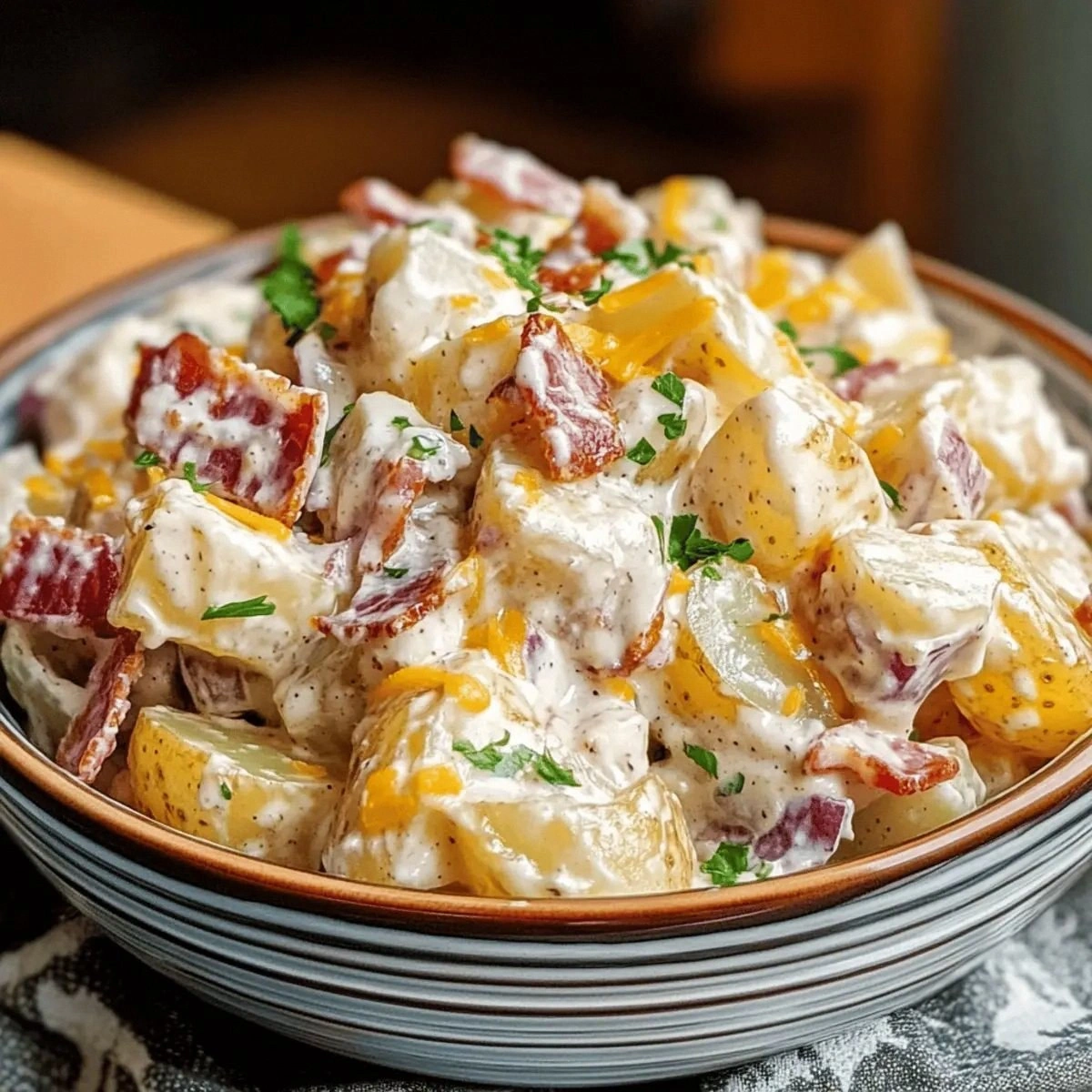
I was standing in my kitchen on a sweltering Saturday, the grill humming like a lazy summer cat, when a friend dared me to bring my “usual” potato salad to the backyard barbecue. I laughed, tossed a bag of red potatoes into a pot, and thought, “Sure, I’ll bring the bland, mayo‑drenched side that everyone pretends to love.” The moment the potatoes hit the boiling water, the kitchen filled with a buttery, earthy perfume that made my stomach do a little happy dance. I could hear the distant clink of ice in glasses, the sizzle of burgers, and the low murmur of guests wondering if the side dish would ever be interesting enough to actually eat.
Fast forward an hour later: I was standing over a bowl of creamy, mustard‑kissed potatoes, the kind that makes you want to scoop a handful straight from the dish and devour it like a guilty pleasure. The bacon had crisped to a perfect, crack‑ling edge that shattered like thin ice under a spoon, while the sharp cheddar melted just enough to create little pockets of molten gold. The dill pickles added a tangy snap that cut through the richness, and fresh herbs floated on top like a green confetti parade. I dared you to taste this and not go back for seconds – I’ll be honest, I ate half the batch before anyone else even got a spoonful.
Most potato salad recipes get this completely wrong: they either drown the potatoes in a swamp of mayo or they forget the essential contrast of texture that makes each bite an adventure. This version stands out because it balances creamy and crunchy, tangy and savory, all while staying deceptively simple. I’m about to reveal a technique that most home cooks skip – a quick blast of high heat that caramelizes the edges of the potatoes just enough to give you that “steakhouse” feel without any fancy equipment. Trust me, this is hands down the best version you’ll ever make at home.
Okay, ready for the game‑changer? Picture yourself pulling this out of the bowl, the whole kitchen smelling like a steakhouse after a midnight rush, the glossy mustard‑cream coating every potato like velvet. The bacon crumbles glisten, the cheese strings, the herbs sparkle – it’s a visual and gustatory masterpiece. Let me walk you through every single step — by the end, you’ll wonder how you ever made it any other way.
What Makes This Version Stand Out
- Texture: The potatoes are boiled just until tender, then finished with a quick high‑heat toss that creates a caramelized crust while keeping the interior buttery soft. This dual texture is the secret that turns a side into a star.
- Flavor Depth: Dijon mustard adds a sharp, sophisticated bite that cuts through the richness of the cream and bacon, while the cheddar brings a mellow sharpness that lingers on the palate.
- Crunch Factor: Crispy bacon and diced dill pickles deliver a satisfying crunch that contrasts the silky sauce, making each forkful an exciting surprise.
- Simplicity: Only seven ingredients, all pantry‑friendly, yet each one is treated with respect and purpose – no unnecessary fluff.
- Make‑Ahead Magic: The salad holds up beautifully for up to 24 hours; flavors meld, and the potatoes stay firm if you follow the cooling tip.
- Crowd Reaction: I dare you to serve this at a gathering and watch people fight over the last scoop – it’s that good.
- Ingredient Quality: Using red potatoes gives a buttery texture and a beautiful color that elevates the dish from “potato salad” to “potato masterpiece.”
- Cooking Method: The brief high‑heat finish is what most recipes skip; it’s pure magic that you’ll want to replicate every time.
Inside the Ingredient List
The Flavor Base
The heart of this salad is the Dijon mustard, a condiment that brings a subtle heat and a bright acidity. Its sharpness cuts through the richness of the cream, preventing the dish from feeling cloying. If you’re allergic to mustard, a splash of whole‑grain mustard can work, but you’ll lose some of that refined bite.
The Texture Crew
Red potatoes: Chosen for their waxy texture, they hold their shape during boiling and develop a buttery interior. Skip the russet and you’ll end up with mushy, grainy bites that fall apart. Look for potatoes that are firm, with smooth skin and no green spots; those green spots indicate solanine and should be avoided.
Crispy bacon: The bacon brings smoky depth and a crunchy contrast. Render it low and slow, then finish under the broiler for that perfect snap. If you’re vegetarian, smoked tempeh strips can mimic the texture, though the flavor will shift.
The Unexpected Star
Sharp cheddar cheese: This cheese melts just enough to create little pockets of gooey goodness, while still retaining a bite. The sharpness amplifies the mustard’s tang, creating a harmonious duet. For a milder profile, use a young cheddar, but you’ll miss the punch that makes this salad unforgettable.
Dill pickles: Their briny snap adds a zing that lifts the entire dish. The dill herb notes echo the fresh herbs added later, tying the flavor loop together. If you’re not a pickle fan, capers work as a substitute, offering a similar salty pop.
The Final Flourish
Fresh herbs (parsley, chives): These herbs add a bright, vegetal lift that prevents the dish from feeling heavy. Parsley contributes a clean, slightly peppery note, while chives bring a subtle oniony sweetness. If you’re out of fresh herbs, a teaspoon of dried herb blend works, but the fresh pop will be missed.
Cream (sour cream or mayo): This is the silky binder that coats each potato. I prefer a 50/50 mix of sour cream and mayonnaise for tang and richness. Using only mayo makes it richer, while only sour cream adds a tangier, lighter mouthfeel.
Everything's prepped? Good. Let's get into the real action…

The Method — Step by Step
-
Start by washing the red potatoes thoroughly, scrubbing off any dirt. Cut them into uniform 1‑inch cubes so they cook evenly. Place the cubes in a large pot, cover with cold water, and add a generous pinch of salt. Bring to a boil over medium‑high heat, then reduce to a gentle simmer.
Cook for about 8‑10 minutes, or until the potatoes are just fork‑tender – you should feel a slight resistance, not mush. Watch Out: Overcooking will turn them into a mushy mess that can’t hold the dressing. Once done, drain and immediately plunge the potatoes into an ice‑water bath for 30 seconds to halt the cooking process and set the texture.
Watch Out: Skipping the ice‑water shock will cause the potatoes to continue cooking from residual heat, leading to a soggy base. -
While the potatoes are cooling, preheat a large skillet over medium‑high heat. Add the bacon strips in a single layer, letting the fat render slowly. Flip occasionally until the bacon is uniformly crisp and the edges have curled like little amber waves.
Remove the bacon onto a paper‑towel‑lined plate, reserving the rendered fat in the skillet. Crumble the bacon into bite‑size pieces once cooled – this is where the crunch lives. Power transition: This next part? Pure magic.
-
In a medium bowl, whisk together the Dijon mustard, cream (or the sour‑cream/mayo blend), and a pinch of freshly ground black pepper. The mixture should be smooth, glossy, and thick enough to coat the back of a spoon.
Taste and adjust: if you crave a sharper bite, add an extra teaspoon of mustard; if you prefer a milder profile, swirl in a splash of milk. This is the moment of truth – the sauce must cling to the potatoes without sliding off.
Kitchen Hack: Warm the mustard‑cream mixture for 30 seconds in the microwave; it will blend more easily with the hot potatoes. -
Drain the cooled potatoes thoroughly and pat them dry with a clean kitchen towel. This step is crucial because excess moisture will dilute the dressing and prevent the caramelization later.
Transfer the potatoes to a large, dry skillet (the same one you used for bacon, wiping out excess fat if needed). Toss them over medium‑high heat for 3‑4 minutes, allowing the edges to turn a light golden brown. You’ll hear a faint sizzle that signals the start of that coveted crust.
-
Remove the skillet from heat and immediately drizzle the mustard‑cream sauce over the potatoes. Toss gently but thoroughly so every cube is cloaked in that velvety coating. The heat from the potatoes will slightly thicken the sauce, creating a glossy finish.
Add the crumbled bacon, shredded cheddar, and diced dill pickles. Fold everything together, ensuring the cheese starts to melt just enough to create little pockets of gooey delight.
-
Finely chop the fresh herbs – parsley and chives – and sprinkle them over the salad. The herbs add a fresh, bright contrast that lifts the heaviness of the bacon and cheese.
Give the salad one final gentle toss. Taste again and season with salt and pepper if needed. I dare you to taste this and not go back for seconds.
-
Transfer the finished salad to a serving bowl. For an extra touch of elegance, drizzle a thin line of extra‑virgin olive oil around the rim – it adds shine and a whisper of fruitiness.
Cover the bowl with plastic wrap and let it rest at room temperature for 10 minutes. This short rest allows the flavors to meld, and the potatoes absorb a bit more of that mustard‑cream goodness.
-
Serve the salad warm, at room temperature, or chilled – it’s versatile. If you’re serving it warm, the cheese will stay soft and the bacon crunch will be at its peak. If chilled, the flavors become more cohesive, and the salad becomes a perfect picnic side.
That’s it — you did it. But hold on, I’ve got a few more tricks that'll take this to another level…
Insider Tricks for Flawless Results
The Temperature Rule Nobody Follows
Never toss hot potatoes into a cold bowl; the sudden temperature shift will cause the starches to release excess moisture, making the salad watery. Instead, use a warm skillet for the final toss, as described in the method, so the potatoes stay slightly hot and the sauce adheres perfectly. I once tried the cold‑bowl method and ended up with a soggy mess – lesson learned.
Why Your Nose Knows Best
When the potatoes hit the skillet, listen for a gentle sizzle that turns into a faint crackle. That sound tells you the edges are caramelizing just right. If you hear a high‑pitched hiss, the pan is too hot and you risk burning the potatoes; lower the heat and keep a watchful eye.
The 5‑Minute Rest That Changes Everything
After mixing, let the salad sit uncovered for five minutes. This rest lets the mustard‑cream sauce thicken slightly, coating each potato more uniformly. It also gives the bacon a chance to re‑absorb a tiny bit of moisture, keeping it crunchy longer.
Bacon Fat Re‑Use
Don’t toss that golden bacon fat! Use it to sauté a handful of minced garlic before adding the potatoes back to the pan. The garlic-infused fat adds a subtle depth that you’ll notice but not be able to pinpoint.
Cheese Timing
Add the sharp cheddar in the last minute of the toss while the potatoes are still hot. This ensures the cheese softens just enough to create pockets without fully melting into a sauce. Over‑melting will make the salad greasy.
Creative Twists and Variations
This recipe is a playground. Here are some of my favorite ways to switch things up:
Smoky Chipotle Kick
Swap half the Dijon mustard for chipotle adobo sauce and add a teaspoon of smoked paprika. The result is a smoky, slightly spicy salad that pairs beautifully with grilled chicken.
Herbaceous Green Goddess
Replace the sharp cheddar with crumbled feta and fold in a handful of baby arugula. The feta adds briny tang, while arugula contributes peppery freshness – perfect for a spring brunch.
Southern Comfort
Use buttermilk instead of cream and add a spoonful of honey mustard. The tangy buttermilk and sweet honey mustard create a comforting Southern vibe that works well with fried catfish.
Mediterranean Medley
Add chopped sun‑dried tomatoes, Kalamata olives, and a sprinkle of oregano. This Mediterranean spin brings umami richness and a burst of Mediterranean sunshine.
Vegan Victory
Replace bacon with smoked tempeh, use a plant‑based mayo mixed with vegan sour cream, and swap cheddar for nutritional yeast mixed with a dash of turmeric for color. The texture and flavor remain satisfying, and the dish stays entirely plant‑based.
Loaded Breakfast Remix
Fold in scrambled eggs and replace the bacon with breakfast sausage crumbles. Serve the salad warm for a hearty breakfast that feels like a steakhouse brunch.
Storing and Bringing It Back to Life
Fridge Storage
Transfer the salad to an airtight container and store in the refrigerator for up to 3 days. The flavors will deepen, and the potatoes stay firm if you keep the container sealed tightly. Before serving, give it a gentle stir and add a drizzle of olive oil if it looks dry.
Freezer Friendly
While not ideal for the freshest texture, you can freeze the salad for up to one month. Portion it into freezer‑safe bags, removing as much air as possible. Thaw overnight in the fridge, then stir in a splash of fresh cream to revive the silky coating.
Best Reheating Method
For a quick warm‑up, spread the salad on a baking sheet and heat in a 350°F (175°C) oven for 10‑12 minutes, stirring halfway through. Add a tiny splash of water or extra cream before reheating; the steam will bring the potatoes back to their original fluffy‑crisp balance without drying them out.