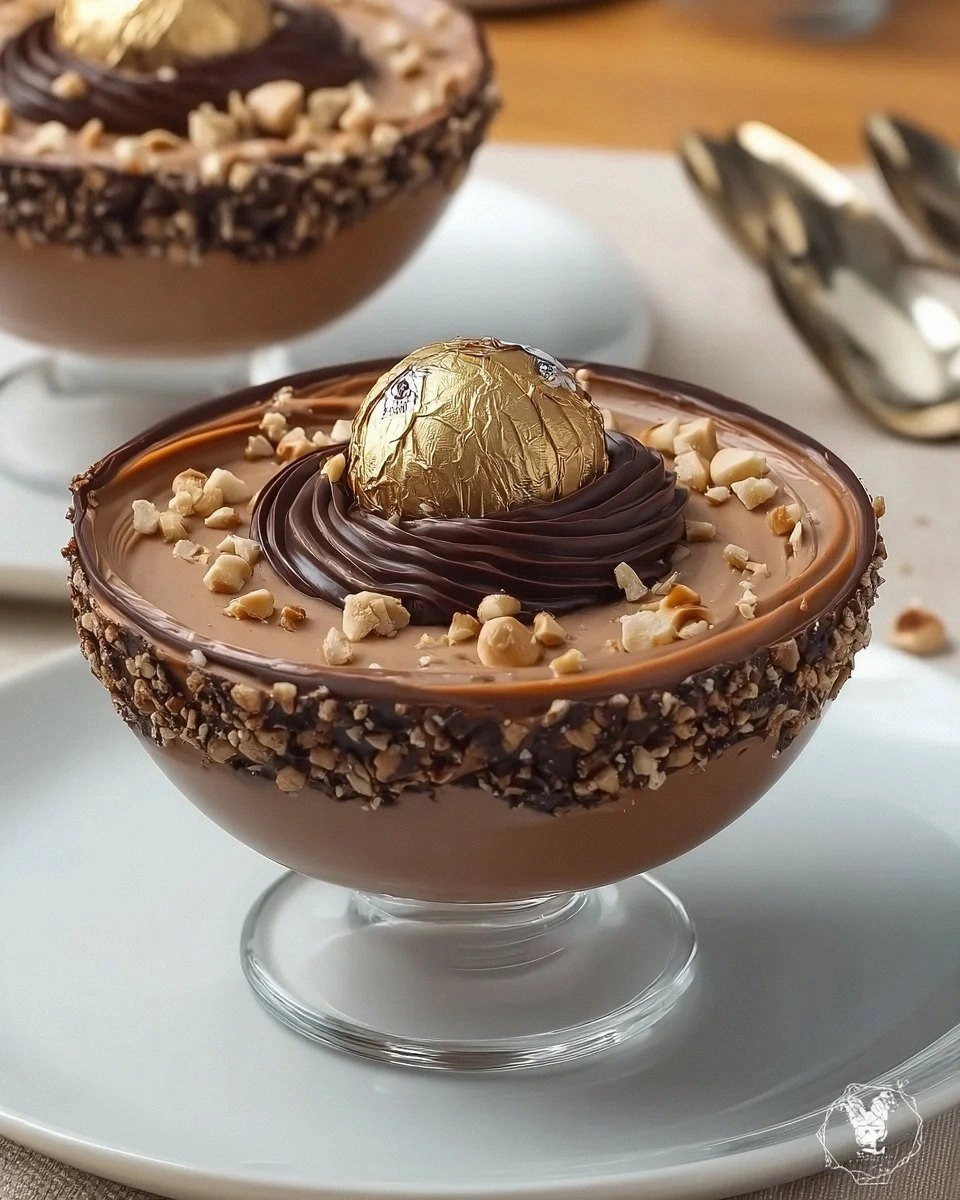
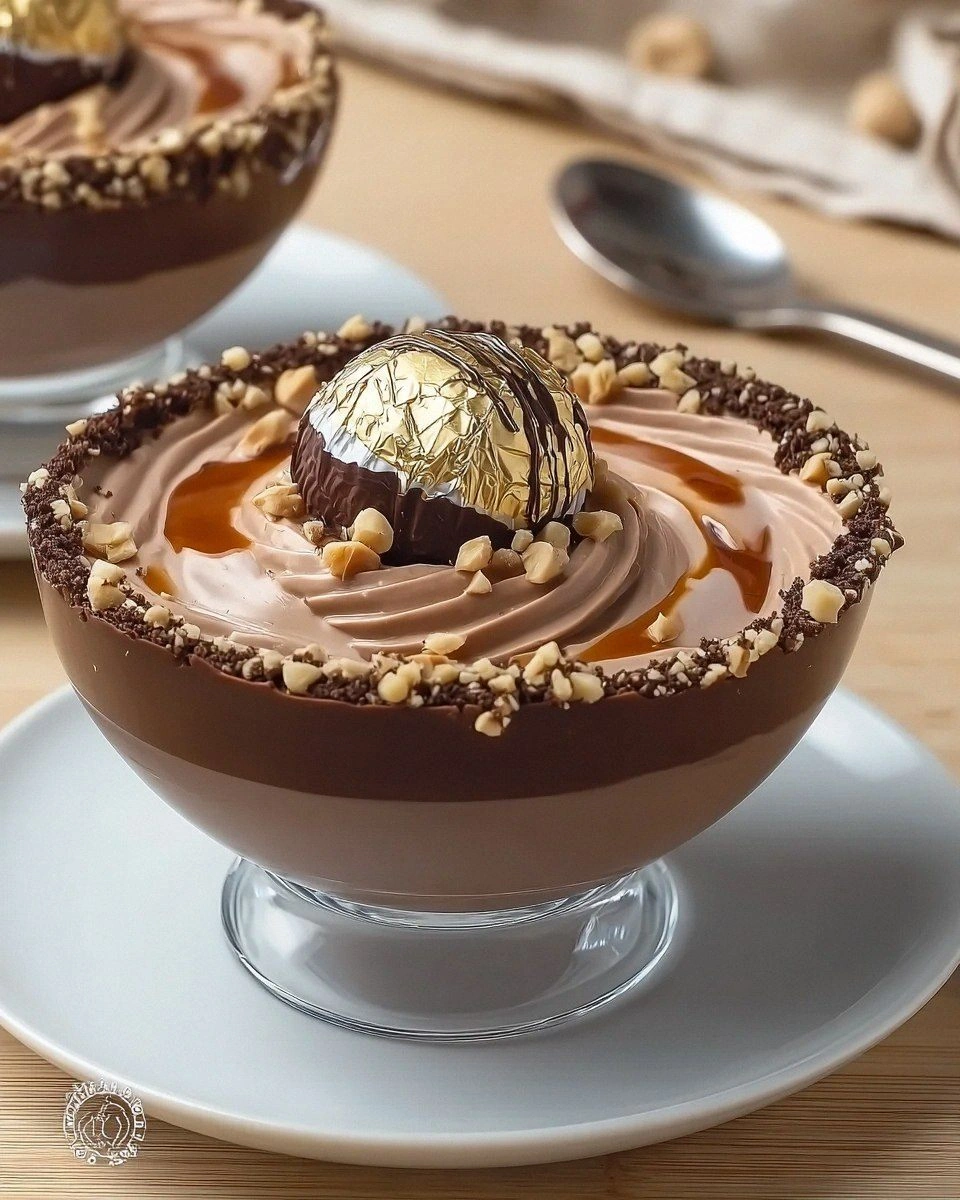
The first time I attempted to recreate those gold-foil-wrapped Rocher chocolates in dessert-bowl form, I ended up with a sticky puddle that tasted like Nutella’s angry cousin and looked like something you'd find at the bottom of a carnival trash can. I was twenty-three, wildly overconfident, and convinced that throwing roasted hazelnuts into melted chocolate was enough to earn a Michelin star in my own head. Fast-forward a decade, three burnt saucepans, and one small kitchen fire (don’t ask), and I’ve finally cracked the code. These Rocher-Dessert-Bowls are the love child of a Ferrero Rocher and a classy dinner-party trifle, and they arrive with the kind of hazelnut-cocoa aroma that makes burglars reconsider their life choices and stay for dessert.
Picture this: midnight in February, rain tapping Morse code on the skylight, and me standing barefoot in pajamas, spooning silky gianduja mousse into chilled glasses while whispering “this is the one” like a cult leader. The toasted hazelnuts are still warm, so their oils perfume the kitchen with that marzipan-meets-coffee scent that turns even the most disciplined eater into a wide-eyed kid. A whisper of sea salt flirts with the sweetness, and the first bite crackles—thank you, feuilletine flakes—before dissolving into a river of chocolate that feels like velvet sarcasm on your tongue. I dare you to taste this and not go back for seconds; I double-dare you to stop at one glass when you’re home alone and nobody’s counting.
Most recipes get this completely wrong. They either drown everything in heavy cream until you’re eating chocolate milk with gravel, or they forget texture entirely and hand you a sad, soggy nut soup. My version layers flavor like a choir hitting different octaves: deep cocoa bass, caramelized nut mid-tones, and a bright, almost citrusy top note from freshly grated tonka bean (stay with me here—this is worth it). The bowls look deceptively simple, but each spoonful is a fireworks show of snap, cream, and melt, and you’ll find yourself chasing the last smear of sauce around the rim like it owes you rent money.
Okay, ready for the game-changer? We’re going to make a quick hazelnut praline, blitz it into a glossy paste, fold it into softly whipped cream, and then crown the whole thing with shards of caramel-hazelnut croquant that shatter like thin ice under the slightest pressure. Future pacing: picture yourself pulling these out of the fridge, the whole kitchen smelling incredible, your friends already hovering with spoons in hand, someone muttering “no way this is homemade.” Let me walk you through every single step—by the end, you’ll wonder how you ever made it any other way.
What Makes This Version Stand Out
Texture Symphony: We’re stacking four distinct textures—crisp feuilletine, airy gianduja mousse, silky ganache, and crackly croquant—so every bite feels like a fireworks finale rather than a monotone pudding. Other recipes give you one, maybe two textures if they’re feeling fancy; we’re running the full percussion section here.
Salt-Forward Balance: A whisper of flaky sea salt amplifies the roasted hazelnut flavor so dramatically that tasters swear there’s twice the chocolate. Most versions are sugar bombs; this one keeps your palate bright and begging for the next spoonful.
Make-Ahead Magic: Every element keeps beautifully for up to four days, so you can assemble in minutes when guests arrive. Try that with a soufflé—yeah, didn’t think so.
Restaurant Trick, Home Budget: We’re using everyday grocery-store hazelnuts and chocolate, but we’ll treat them like royalty: roast, steam, and rub the skins off for pure nut flavor, then bloom the cocoa with hot cream for depth you’d swear came from a $12 dessert bar.
Crowd Reaction Guarantee: I’ve served these at birthdays, office potlucks, and one particularly tense book club—every single time someone closes their eyes and says something inappropriate. One guy proposed marriage; his wife was standing right next to him.
Intuitive Steps: No candy thermometers, no scary tempering. If you can toast nuts and whisk cream, you’ve got this. I’ll be honest—I ate half the batch before anyone else got to try it, and I still had enough to fill six glasses.
Inside the Ingredient List
The Flavor Base
Good-quality cocoa powder is non-negotiable. I reach for Dutch-processed because its deeper, less acidic profile marries with the hazelnuts like old jazz musicians who’ve jammed together for decades. Skimp here and you’ll get a wan, dusty taste that screams “packet mix.” If you only have natural cocoa, bump up the sugar by a teaspoon to calm the sharper edges, but expect a slightly reddish hue rather than the plush mahogany we’re after. And please, for the love of all that is holy, replace that tin that’s been sitting in your pantry since 2019—cocoa fades faster than your motivation on a Monday morning.
The Texture Crew
Feuilletine flakes are the unsung heroes that give pastry chefs their secret crunch. They’re ultra-thin, caramelized crêpe bits that stay shatter-crisp even when buried in mousse for days. Can’t find them? Crushed Cornflakes mixed with a teaspoon of melted butter and a pinch of sugar get you 80 % of the way there, though you’ll lose some of that bakery-counter mystique. Another option is crushed ice-cream cones, but steer clear of sugary cereals unless you want dessert that tastes like Saturday-morning cartoons.
The Unexpected Star
Tonka bean is my clandestine weapon. One swipe across a microplane releases warm notes of vanilla, almond, and cherry that make people ask, “What am I tasting?” in the best possible way. It’s technically banned in the U.S. for commercial food (don’t get me started), but home use sits in a happy gray zone. No tonka? Substitute ¼ tsp almond extract plus the zest of ½ orange, and you’ll still get that haunting perfume without the regulatory drama.
The Final Flourish
We’re finishing with a drizzle of hazelnut oil, not butter, because butter sets firm when cold and can plaster to the roof of your mouth like peanut butter on wonder bread. A thin stream of toasted nut oil stays glossy and delivers an aroma so vivid you’ll swear you’re walking through an Italian grove in late September. Buy small bottles from the refrigerated section; the oil goes rancid faster than you can say “oxidation,” and nothing ruins dessert like the whiff of old library book.
Everything’s prepped? Good. Let’s get into the real action...
The Method — Step by Step
- Heat your oven to 175 °C (350 °F). Spread 150 g raw hazelnuts on a dry sheet pan and roast for 12 minutes, shaking once, until the skins are blistered and the kitchen smells like you’ve moved into a Nutella factory. That nutty fog means the oils are waking up—this is the moment of truth. Tip the hot nuts into a clean kitchen towel, gather the corners, and let them steam for 2 minutes; friction plus heat loosens the skins so you can rub most off with the towel. Don’t obsess over a few stubborn bits—they add a pleasant bitterness reminiscent of espresso.
- While the nuts cool, line a small tray with baking paper and scatter 50 g granulated sugar in an even layer. Slide it under the broiler for 3–4 minutes until the edges caramelize to the color of an old penny; watch like a hawk because sugar moves from hero to charcoal faster than you can say “fire extinguisher.” Pour the molten caramel over the warm hazelnuts and let it set for 5 minutes, then blitz the whole brittle in a food processor until you have a glossy praline paste that ribbons off the spatula like slow lava. This next part? Pure magic.
- Finely chop 100 g dark chocolate (60 %) and scrape it into a heat-proof bowl. Heat 120 ml heavy cream until it just begins to steam—tiny bubbles at the perimeter, not a rolling boil—then pour it over the chocolate. Let the mixture stand undisturbed for 90 seconds; the cream’s heat blooms the cocoa butter and melts the solids so when you whisk gently from the center outward, you get a mirror-smooth ganache that coats the back of a spoon like velvet.
- In a chilled bowl, whisk 240 ml cold heavy cream with 1 Tbsp icing sugar to soft peaks that slump gently like whipped cloud. Add half the praline paste and a pinch of sea salt, then fold with a spatula using slow, deliberate strokes that scoop from the bottom and lift over the top—think of tucking a child into bed. The goal is to maintain air pockets so the mousse feels weightless rather than spreadable butter.
- Now for the feuilletine crunch: in a dry skillet, toast 40 g flakes over medium heat for 90 seconds, stirring constantly, until they deepen one shade and smell like caramel corn. That sizzle when it hits the pan? Absolute perfection. Remove promptly; they burn if you blink.
- Divide half the feuilletine among six small glasses or cappuccino cups, pressing lightly so they form a sturdy foundation that won’t go soggy under the mousse onslaught. Spoon the hazelnut mousse on top, filling each glass about two-thirds full, then tap the bases on the counter to expel any sneaky air pockets that could collapse the structure later.
- For the croquant topper, melt 2 Tbsp sugar with 1 tsp water in a small saucepan over medium heat. When it reaches a deep amber, stir in 20 g chopped toasted hazelnuts and immediately pour the mixture onto a silicone mat. Let it cool 3 minutes, then blitz the shards in a blender for 2 seconds—you want gravel, not powder. This is the fun part: sprinkle generously so each serving looks like edible confetti.
- Refrigerate the bowls uncovered for 20 minutes to set the mousse, then cover loosely with cling film and chill at least 2 hours or up to 4 days. Before serving, drizzle a thin thread of hazelnut oil and add a final snowflake of flaky salt. That first crack as spoons hit the croquant is the sound track to your new reputation as the dessert wizard of your friend group.
That's it—you did it. But hold on, I've got a few more tricks that'll take this to another level...
Insider Tricks for Flawless Results
The Temperature Rule Nobody Follows
Every element should be cool except the ganache, which should be just warm enough to pour. If the ganache goes above 35 °C (95 °F) when you fold it into the cream, you’ll deflate the air pockets and end up with soup that sets like chocolate butter. Conversely, if the ganache is too cold, it seizes into flecks and you’ll have mousse that looks like cookies ’n’ cream gone wrong. Aim for body-temperature warmth—dab a drop on your wrist; it should feel like nothing, not hot, not cold. This tiny detail is the difference between a dessert that feels like silk and one that feels like regret.
Why Your Nose Knows Best
Rely on aroma cues more than timers. When the feuilletine toasts, you’ll first smell warm cereal, then caramel, then a nutty warning shot—pull it off the heat at that exact moment. Olfactory signals travel faster to your brain than visual ones, and once you tune in, you’ll never burn another flake. A friend tried skipping this step once—let’s just say it didn’t end well, and her cat still won’t go near the stove.
The 5-Minute Rest That Changes Everything
After whipping the cream, let it sit uncovered in the fridge for 5 minutes before folding in the praline. This brief rest tightens the bubbles so they hold their shape when you introduce the heavier paste, giving you a mousse that stands proud instead of slumping like melted ice cream. It’s like letting steak rest after searing—patience equals payoff.
Creative Twists and Variations
This recipe is a playground. Here are some of my favorite ways to switch things up:
Coffee-Hazelnut Affogato Style
Swap 20 ml of the cream in the ganache with hot espresso, then layer the mousse over a shot of chilled cold-brew concentrate in each glass. Serve with a tiny pitcher of warm espresso so diners can pour and watch rivers of coffee cut decadent trenches through the mousse. Perfect for brunch when you need both dessert and caffeine but only have two hands.
Salted Caramel & Pecan Remix
Replace hazelnuts with pecans and fold 2 Tbsp of bourbon into the praline paste. Top with shards of smoked-sugar croquant for a Southern twist that tastes like pecan pie in a tuxedo. Warning: bourbon fumes can ignite if the pan’s too hot—keep a lid handy and your eyebrows intact.
White Chocolate Raspberry Swirl
Use roasted pistachios instead of hazelnuts and fold crushed freeze-dried raspberries into the mousse. The tart berries cut the white chocolate’s cloying sweetness, and the magenta streaks look like modern art. Great for baby showers when you need something pink but classy.
Vegan Coconut Cloud
Sub chilled coconut cream for dairy cream and use 70 % dark chocolate. Make the praline with coconut sugar and finish with toasted coconut flakes for a tropical vacation vibe that happens to be plant-based. Even dairy devotees inhale it; I’ve seen it disappear faster than free pizza at a college dorm.
Spiced Orange Winter Warmer
Infuse the cream with a cinnamon stick and strip of orange zest overnight, then proceed as written. The resulting mousse tastes like Christmas morning but works any time you want sweater-cozy flavors without pumpkin-spice fatigue. Serve with a shot of mulled wine on the side for adults-only game night.
Mini Cheesecake Hybrid
Press a thin layer of crushed digestive biscuits mixed with melted butter into each glass before adding feuilletine. The biscuity base gives New York–style structure while still keeping the Rocher DNA intact—best of both worlds when you can’t decide between cheesecake and mousse.
Storing and Bringing It Back to Life
Fridge Storage
Cover each glass with cling film pressed gently onto the surface to prevent the mousse from absorbing fridge odors—nobody wants chocolate that tastes like last night’s leftover pizza. They’ll stay pristine for 4 days, though the croquant will soften slightly after 48 hours. If you need longer crunch, store the shards separately in an airtight jar and add just before serving.
Freezer Friendly
These bowls freeze beautifully for up to 2 months. Wrap each glass in foil, then slide into a zip-top bag with the air sucked out like you’re vacuum-sealing treasure. Thaw overnight in the fridge; the texture stays mousse-light because there’s no gelatin to get rubbery. Pro tip: half-thaw for 45 minutes and you’ve got a fudgy semifreddo situation that tastes like gelato’s sophisticated cousin.
Best Reheating Method
There’s no reheating here—this is a chilled dessert—but if you want to revive a day-old bowl, add a fresh sprinkle of feuilletine and a tiny drizzle of warm hazelnut oil. The heat contrast wakes up the aromas and tricks everyone into thinking you just whipped it up. Add a splash of Frangelico tableside for drama; the alcohol hits the cold mousse and releases a fragrant cloud that makes guests lean in like moths to a flame.