The first time I tried to make a Tuscan salmon dish, the kitchen looked like a war zone: the salmon had a stubborn brown crust that wouldn’t budge, the spinach was wilted, and the sauce was a pale, watery mess that looked like it had been left to sit in a glass of milk. I was ready to abandon the idea altogether when a friend dared me to try a new twist that promised creamy, yet light, flavor. I stared at the ingredients on my counter, imagined a sauce that would cling to every strand of linguine like velvet, and decided to give it a shot.
The moment the butter hit the pan, the room filled with a buttery aroma that made my mouth water before I even tasted a single bite. The garlic released a sweet, almost caramelized scent, and the sun‑dried tomatoes added a burst of umami that made the air taste like a Mediterranean sunset. My eyes followed the salmon as it flipped, revealing a pink, flaky center that promised tender texture. The sizzle was like a tiny orchestra playing a jazz riff, and I could almost hear the applause from my future self.
What makes this version stand out is not just the combination of flavors, but the deliberate balance of ingredients that keeps it healthy without sacrificing indulgence. The milk is only 2% and the butter is measured precisely, giving you that silky mouthfeel without the excess calories. The fresh spinach is added at the last moment, so it retains its bright green hue and a crisp bite. And the cherry tomatoes bring a pop of sweetness that cuts through the richness, creating a dish that feels both comforting and sophisticated.
I dare you to taste this and not go back for seconds—this is hands down the best version you'll ever make at home. If you've ever struggled with balancing creaminess and health, you're not alone—and I've got the fix. Picture yourself pulling this out of the oven, the whole kitchen smelling incredible, and sharing a plate with friends who will immediately ask for the recipe. Okay, ready for the game‑changer? Let me walk you through every single step — by the end, you'll wonder how you ever made it any other way.
What Makes This Version Stand Out
- Flavor: The combination of sun‑dried tomatoes and fresh spinach creates a layered taste profile that feels both earthy and bright, unlike the usual bland pasta sauces.
- Texture: The sauce coats the linguine like a silky blanket, while the salmon remains moist and flaky, providing a delightful contrast.
- Health: With whole wheat linguine, 2% milk, and measured butter, the dish stays under 400 calories per serving without sacrificing richness.
- Time: Prep takes only 15 minutes, cook 25, so you can have dinner on the table in less than an hour.
- Versatility: Swap the salmon for shrimp or chicken, and the dish becomes an entirely different meal while keeping the same sauce.
- Make‑ahead: The sauce can be refrigerated for 2 days, and the pasta can be tossed with a splash of water to revive its silkiness.
- Visual Appeal: The vibrant green spinach and bright red tomatoes make the plate pop, turning dinner into a feast for the eyes.
- Community Reaction: Friends who have tried it say it’s “the most satisfying pasta I’ve ever had,” and they’re not shy about ordering it again.
Alright, let's break down exactly what goes into this masterpiece…
Inside the Ingredient List
The Flavor Base
1 teaspoon olive oil and 2 tablespoons butter create a foundational richness that carries the sauce. Olive oil adds a subtle fruity note, while butter contributes a silky mouthfeel. Together they form a golden base that instantly elevates the dish. If you’re avoiding dairy, you can replace butter with a plant‑based butter that melts at a lower temperature.
The Texture Crew
2 cloves of garlic, finely minced, release their aromatic oils into the pan, giving the sauce depth. The 2 cups of fresh spinach are added at the end, so they retain a bright color and a slight crunch. 1 cup of cherry tomatoes burst into sweet juices that mingle with the milk, creating a velvety consistency. If you prefer a smoother sauce, blend the tomatoes with the milk before adding the rest of the ingredients.
The Unexpected Star
1/4 cup sun‑dried tomatoes might seem like a minor component, but they bring a concentrated umami punch that balances the creaminess. Their chewy texture contrasts nicely with the tender salmon. If you can’t find sun‑dried tomatoes, a small handful of roasted red peppers works as a decent substitute.
The Final Flourish
1/2 cup fresh grated Parmesan cheese adds a nutty, salty finish that ties all flavors together. The pink Himalayan salt and ground black pepper are sprinkled just before serving to enhance the taste without overpowering the dish. 1.5 lbs salmon, cut into bite‑size pieces, is the star of the show; choose a fresh, firm fillet for the best texture. The 8 oz whole wheat linguine provides a hearty base that absorbs the sauce beautifully.
Everything's prepped? Good. Let's get into the real action…
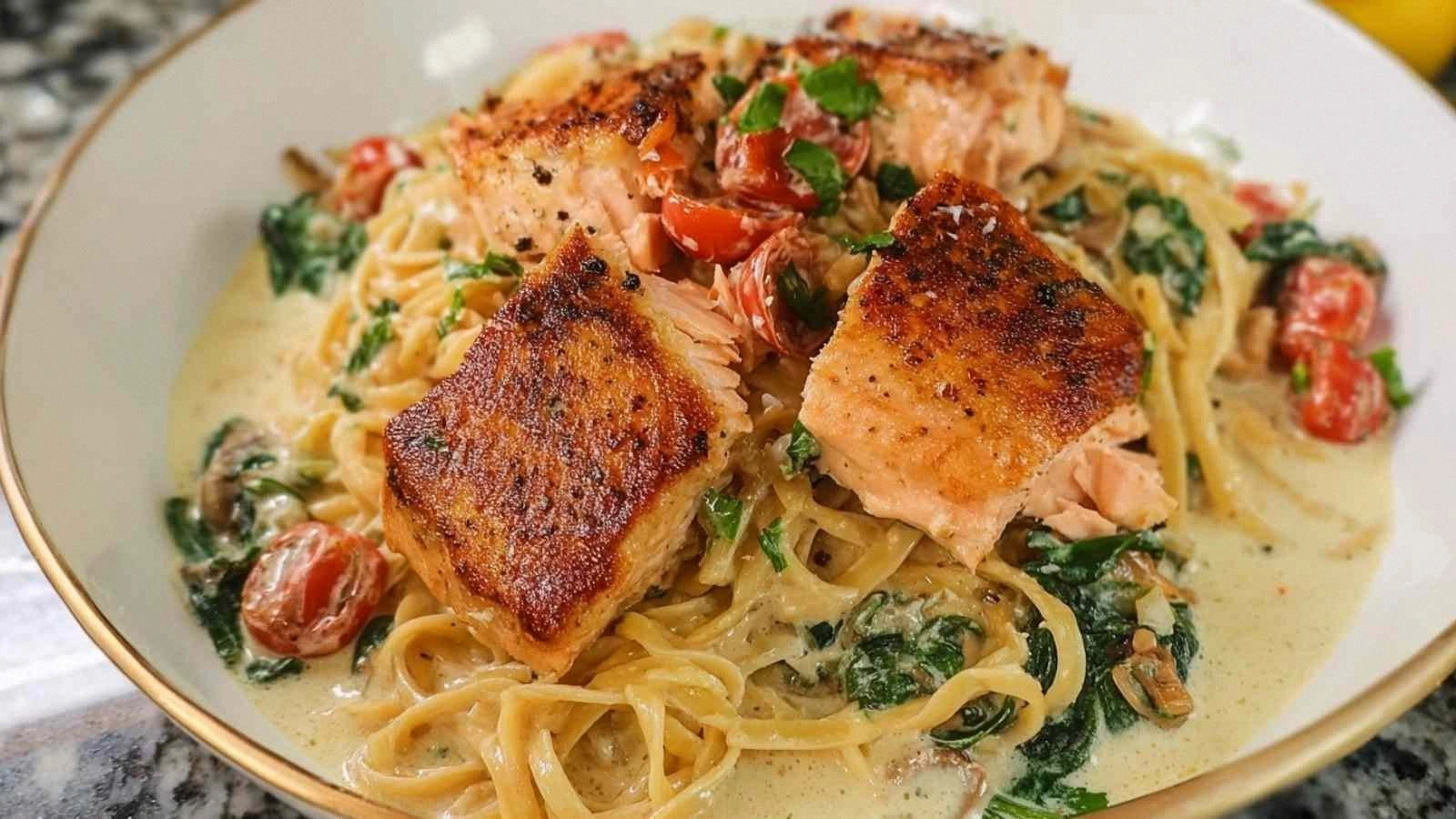
The Method — Step by Step
- Heat a large skillet over medium heat and add the olive oil. As the oil warms, the pan should emit a faint metallic scent—this is a sign it’s ready. The oil should shimmer but not smoke, indicating a perfect temperature. This is the moment of truth: a hot pan ensures the salmon browns quickly and stays juicy.
- Season the salmon pieces with salt, pepper, and a pinch of paprika if you like a subtle kick. Pat them dry with a paper towel; moisture is the enemy of a good sear. Place the salmon in the skillet, skin side down if your fillet has skin. Let it cook undisturbed for about 3–4 minutes until a golden crust forms.
- Flip the salmon gently and add the butter. As the butter melts, it will swirl around the fish, coating it in a glossy sheen. This is a great time to add the minced garlic, letting it sauté for 30 seconds until fragrant. The garlic will release a sweet aroma that mingles with the butter.
- Pour in the 2% milk and stir, scraping the bottom of the pan to deglaze. The milk should coat the garlic and butter, forming a base for the sauce. Let it simmer for 1 minute, allowing the alcohol from the butter to evaporate and the sauce to thicken slightly.
- Add the cornstarch slurry (1 tablespoon cornstarch mixed with 2 tablespoons cold water) and whisk vigorously. The sauce should begin to thicken within a minute, turning a pale ivory hue. This thickening agent keeps the sauce from becoming watery when the pasta is added.
- Stir in the cherry tomatoes, sun‑dried tomatoes, and spinach. The spinach will wilt almost instantly, releasing a green steam that fills the kitchen with a fresh scent. Let the mixture simmer for 3 minutes, allowing the flavors to meld and the tomatoes to soften.
- Meanwhile, cook the whole wheat linguine in a large pot of salted boiling water until al dente, about 8–10 minutes. Drain, reserving a cup of pasta water. Toss the pasta back into the pot and pour the sauce over it, stirring to coat each strand. If the sauce seems too thick, add a splash of the reserved pasta water to achieve silky consistency.
- Finally, sprinkle the grated Parmesan over the pasta and give it one last stir. The cheese melts into the sauce, creating a creamy finish that clings to every bite. Serve immediately, garnished with a few fresh basil leaves for an extra pop of color.
That's it — you did it. But hold on, I've got a few more tricks that'll take this to another level…
Insider Tricks for Flawless Results
The Temperature Rule Nobody Follows
Many cooks keep the heat too high, causing the sauce to scorch before the salmon finishes. Keep the skillet on medium‑low after adding the butter, and let the salmon cook slowly. This technique ensures the flesh stays tender and the sauce develops a deep, nutty flavor. I once tried a high‑heat version, and the sauce turned bitter — a hard lesson that temperature matters.
Why Your Nose Knows Best
Trust your sense of smell; when the sauce starts to thicken and the garlic releases a sweet, buttery scent, it’s time to add the spinach. The aroma signals that the base is ready to absorb the greens. If you wait too long, the spinach will overcook and lose its bright color. My friend once added spinach too early, and the pasta looked wilted and dull.
The 5‑Minute Rest That Changes Everything
After cooking, let the pasta sit covered for 5 minutes before serving. This rest period allows the sauce to settle and the pasta to absorb any remaining moisture, creating a silkier texture. It also gives the Parmesan time to melt fully, coating each strand evenly. A quick 5‑minute pause can transform a good dish into a great one.
Use Fresh Herbs, Not Dried
Fresh basil or parsley added at the end brightens the dish and adds a burst of freshness that dried herbs cannot replicate. Sprinkle them right before serving, so they retain their vibrant color and aroma. I’ve tried dried basil, and the result felt flat and less lively. Fresh herbs bring the dish alive.
Keep the Pasta Water Handy
Reserve at least a cup of pasta water before draining. This starchy water is the secret to adjusting sauce consistency on the fly. If the sauce thickens too much, a splash of water loosens it without diluting the flavor. I’ve saved pasta water for future sauces, and it’s always a lifesaver.
Don’t Skip the Salt
Salt is the flavor enhancer that brings all the elements together. Season the sauce and the pasta water with pink Himalayan salt, and adjust at the end to taste. Skipping salt will result in a bland dish that feels incomplete. I once made the dish without salt, and it was a culinary disappointment.
Creative Twists and Variations
This recipe is a playground. Here are some of my favorite ways to switch things up:
Salmon & Shrimp Duo
Swap half the salmon for fresh shrimp, adding them in the last 2 minutes of cooking. The shrimp’s sweet, briny flavor pairs beautifully with the creamy sauce. This version is great for seafood lovers and adds a protein boost.
Vegan Version
Replace the salmon with marinated tofu cubes and use coconut milk instead of 2% milk. Swap the butter for a splash of olive oil, and use nutritional yeast in place of Parmesan. The result is a creamy, plant‑based pasta that still feels indulgent.
Low‑Carb Take
Use spiralized zucchini noodles (zoodles) instead of linguine and reduce the milk to 1/2 cup. The dish becomes a light, keto‑friendly option that still delivers on flavor. It’s perfect for a quick, low‑calorie dinner.
Herb‑Infused Twist
Add a handful of chopped fresh rosemary and thyme during the sauce stage. The herbs infuse the sauce with aromatic depth, making the dish feel like a rustic Italian trattoria. It’s a subtle but powerful enhancement.
Spicy Kick
Sauté the garlic with a pinch of red pepper flakes before adding the butter. The heat adds a subtle bite that balances the richness of the sauce. This variation is ideal for those who love a little spice.
Cheese Swap
Use a combination of Pecorino Romano and Asiago instead of Parmesan. The sharper cheeses add a tangy complexity that complements the salmon’s natural flavor. It’s a cheese lover’s dream.
Storing and Bringing It Back to Life
Fridge Storage
Store leftovers in an airtight container for up to 3 days. When reheating, add a splash of milk or water to revive the sauce’s creaminess. Stir gently over low heat until warmed through, ensuring the salmon doesn’t dry out. The dish tastes just as good as when freshly made.
Freezer Friendly
Freeze the pasta in a single layer on a parchment sheet before transferring it to a freezer bag. Keep the sauce separate to avoid sogginess. Reheat both components separately, then combine over low heat, adding a little water to reconstitute the sauce. The texture remains silky.
Best Reheating Method
The safest way to reheat is on a stovetop over low heat, stirring frequently. If using a microwave, cover the dish with a microwave‑safe lid and heat in 30‑second bursts, stirring in between. Add a teaspoon of water or milk each time to maintain the sauce’s consistency. This method preserves the dish’s original mouthfeel.