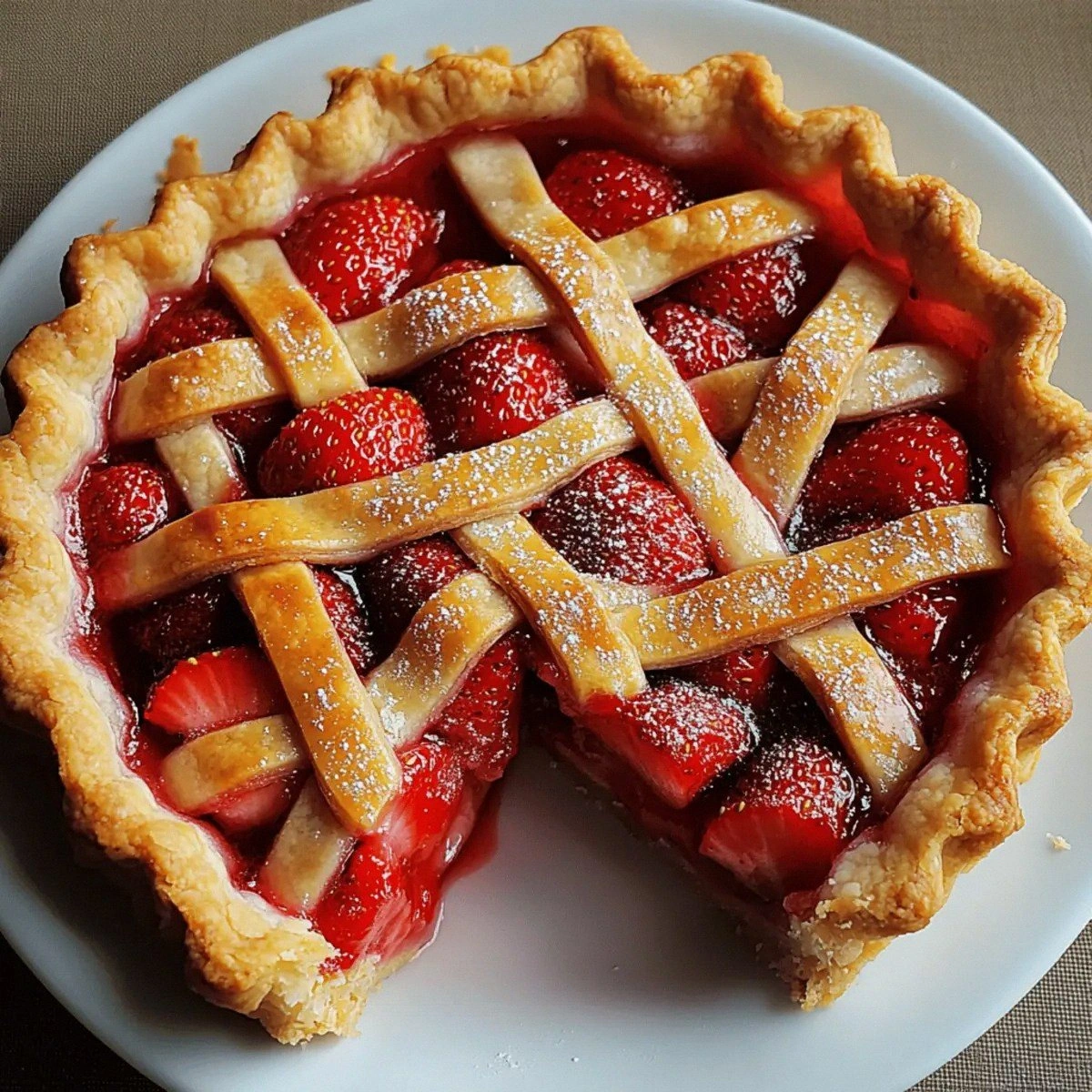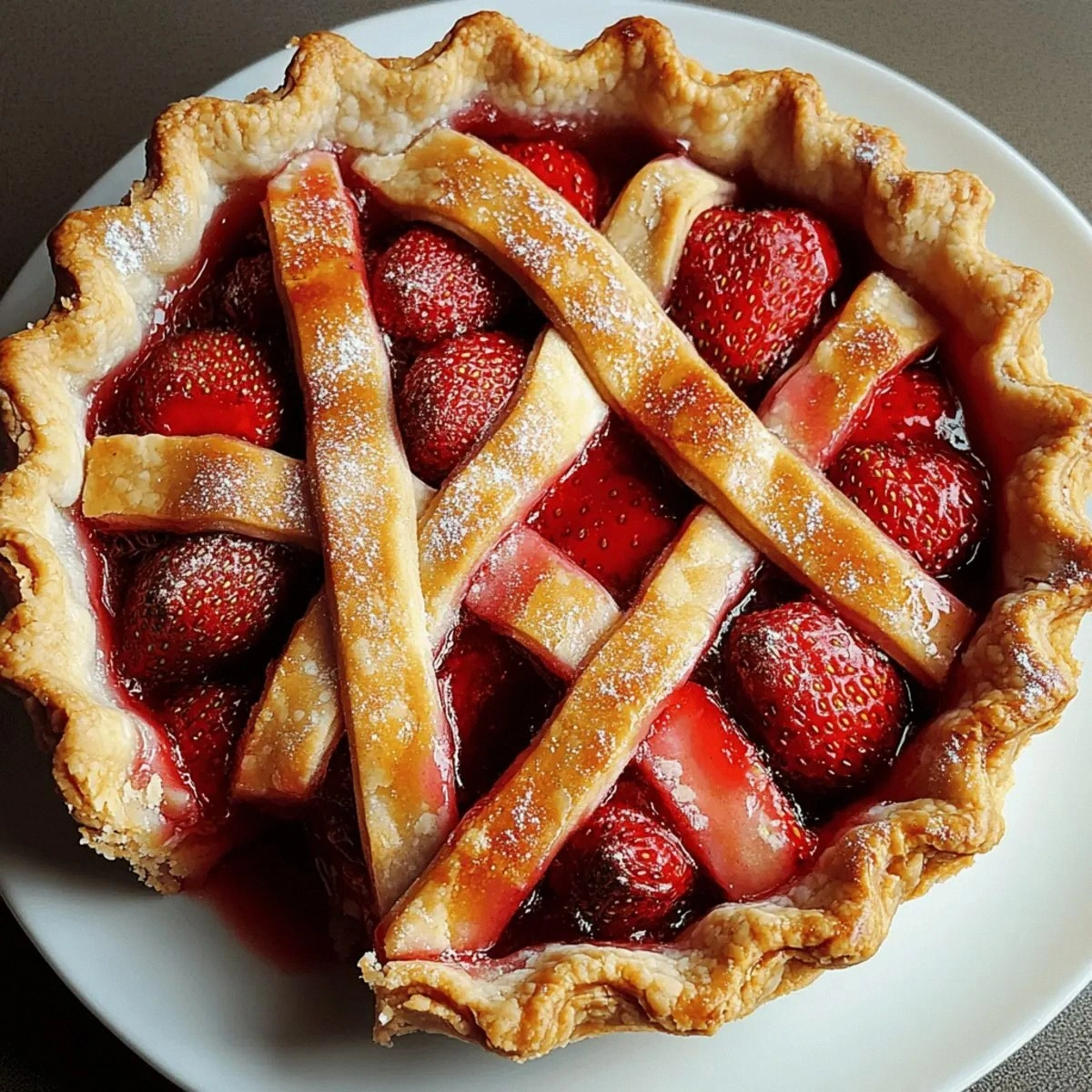
Picture this: it is late June, the afternoon sun is throwing gold bars across your countertop, and someone just handed you a flat of strawberries so fragrant you can practically taste the color red. You could hull them, freeze them, toss them into a smoothie and call it a day—but that would be ignoring the siren call of summer itself, the one that whispers, “Bake me into something that tastes like flip-flops and fireworks.” That is exactly how this pie was born. I was supposed to be cleaning the garage, but the berries smelled like childhood vacations, and my rolling pin was giving me the side-eye from the drawer. Twenty minutes later butter was hissing in the food processor, flour was snowing on everything, and I was on the road to the most addictive strawberry pie I have ever slid into an oven.
Most strawberry pies are polite—too polite. They sit there all glossy and demure, tasting like strawberry Jell-O in a crust. This one is the rowdy cousin who shows up with road dust on its boots and a wink in its eye. The crust is buttery enough to make a French baker blush, but it is intentionally rough around the edges, because “rustic” is code for “nobody has time to crimp like a Victorian wallpaper hanger.” The filling is pure berry, no red goo, thickened just enough to keep it from sliding off your plate when you attack it with a fork. A whisper of lemon sharpens the fruit, a breath of vanilla makes it taste like strawberries turned up to eleven, and the top gets a crunch of turbinado that crackles like thin ice under your teeth. I dare you to taste this and not go back for seconds; I ate half the first one standing up at my kitchen counter, juice running down my wrist like I was in a pie-eating contest against myself.
Summer deserves a dessert that feels like cannonballing into the deep end of a pool, not like doing laps. This is that cannonball. The berries roast into jammy pockets that burst when you bite them, the crust shatters into flaky shards that dissolve on your tongue, and the whole thing smells so intoxicating that neighbors will mysteriously appear at your door with empty plates and hopeful eyes. I have seen grown adults close their eyes and sigh when they taste it; I have also seen a nine-year-old try to trade his entire Pokémon card collection for another slice. Fair trade, if you ask me.
What pushes this recipe over the cliff from “pretty good” into “are you absolutely kidding me” territory is a handful of tiny but fierce techniques you will not find in polite cookbooks. We are going to blind-bake with a packet of dried beans you will swear you donated to Goodwill, macerate the berries so they bleed out their own natural syrup, and dot the filling with butter like we are smuggling treasure. Stay with me here—this is worth it. Let me walk you through every single step; by the end you will wonder how you ever made it any other way.
What Makes This Version Stand Out
Flavor Bomb: Most recipes drown berries in sugar until they taste like candy. We use just enough to amplify the fruit, then lemon and vanilla to make the strawberries taste like they hired a PR team.
Texture Tango: A flaky, shattery crust meets jammy roasted berries and a crackling sugar lid. Each bite is a three-act play: crunch, squish, crackle.
Lazy-Gorgeous: No lattice, no braiding, no cookie-cutter leaves. You fold the edges like you are wrapping a present in a hurry and it still looks like it belongs on the cover of a lifestyle magazine.
Fail-Proof Crust: We blitz butter into flour until it is the size of chickpeas—big enough to steam pockets of flakiness, small enough to roll without tearing. If you have ever wrestled with a tough crust, this is your liberation.
Crowd Gas Factor: Bring this to any barbecue and watch the host stop mid-sentence when they taste it. I have witnessed actual silence fall over a deck full of chatty relatives.
Road-Trip Friendly: It holds up at room temperature for hours, so you can pack it in a cardboard box, drive two hours to the lake, and still serve it with pride and a plastic spork.
Make-Ahead Hero: Bake it the night before, leave it on the counter under a tea towel, and wake up to the best breakfast of your life—do not tell me you have never had pie for breakfast.
Alright, let us break down exactly what goes into this masterpiece, starting with the cast of characters that make the magic happen.
Inside the Ingredient List
The Flavor Base
All-purpose flour is the quiet backbone—2.5 cups give us enough gluten to stay crisp but not so much that we are chewing leather. Bread flour would turn this into a tire, cake flour would dissolve into sad crumbs; all-purpose is the Goldilocks zone. The single tablespoon of granulated sugar in the crust is not about sweetness; it is there to help the edges caramelize into mahogany shards that snap like toffee. Skip it and your crust will taste flat, like bread that forgot to have a personality. Salt is the invisible amplifier; without it, butter tastes like nothing and strawberries taste like red water. Use the full teaspoon and do not apologize.
The Texture Crew
One cup of butter sounds decadent because it is, and that is the entire point. You want it chilled so it stays in pea-sized pockets that steam open in the oven, creating the geological layers that make geologists weep. Ice water is not negotiable—six to eight tablespoons keep the gluten from throwing a tantrum while still letting the dough hold together. Too much and you are chewing gum; too little and the crust cracks like a desert lakebed. The egg wash is cosmetic armor: it bronzes the surface into something that looks like it came out of a French patisserie, and the turbinado sugar is the final glitter that crackles under your teeth like tiny geodes.
The Star Attraction
Four cups of strawberries look like a mountain when you hull them, but they shrink into concentrated rubies once the oven evicts some of their water. Go for the darkest berries you can find—if they are white at the shoulders they will taste like disappointment and regret. Halving them keeps the filling chunky; slice them thin and you are making baby food. The 0.75 cups of sugar might seem stingy, but the berries bring their own candy if you treat them right. Cornstarch is the silent bouncer that keeps everything from turning into soup; two tablespoons is the sweet spot. Lemon juice is the high note that makes the berries sing in tune, and vanilla is the velvet curtain that everything walks out from behind.
The Unexpected Star
One lonely tablespoon of butter dotted over the filling melts into tiny golden ponds that self-baste the berries and leave you with glossy pockets of fruit that look like jewels in a treasure chest. Skip this and the top layer of berries will shrivel into leather. Turbinado sugar on top is optional only if you hate joy; it melts into a glassy sheet that fractures like crème brûlée when you slice it. If you cannot find turbinado, demerara works, plain sugar works, but do not skip the crunch—texture is what separates good pie from religious experience.
Everything is prepped? Good. Let us get into the real action, starting with the part where we turn butter and flour into something that makes grown men weep.
The Method — Step by Step
- Make the Dough Like You Mean It: In the bowl of a food processor, pulse flour, sugar, and salt twice just to wake them up. Scatter the cold cubed butter over the top and pulse five to seven times until the biggest pieces are the size of chickpeas and the smallest are like oatmeal. You want variety—those big chunks are your flake makers. Drizzle six tablespoons of ice water around the blade and pulse just until the dough starts to ride up the sides. It will still look crumbly, but grab a handful and squeeze: if it holds together like wet sand at the beach, you are golden. If it collapses into a sad pile, add another tablespoon of water and pulse once more. Turn the mess out onto the counter, divide it roughly in half with one piece slightly bigger (that is your bottom crust), and press each into a disk. Wrap in plastic and chill at least one hour. Do not skip the rest—warm dough is a sticky, stretchy nightmare that will shrink in the oven like a wool sweater.
- Roll With Attitude: On a floured counter, whack your larger disk a few times with the rolling pin to soften the edges, then roll from the center out, giving the dough a quarter-turn every couple of passes to keep it round. Think of it as steering a lazy river. If it cracks, smush the crack back together and keep going; this dough is forgiving. Roll until you have a 12-inch circle about ⅛-inch thick. Transfer to a 9-inch pie plate by folding it into quarters, laying it in the center, and unfolding like a picnic blanket. Leave about an inch overhang, trim the excess with scissors, then chill the shell while you prep the filling. Cold dough equals no shrinking—remember that like your Wi-Fi password.
- Macerate the Berries (a.k.a. Berry Spa Treatment): In a big bowl, toss strawberries with sugar, cornstarch, lemon juice, and vanilla. Let them sit for 20 minutes while you gossip with your neighbor or scroll cat videos. The sugar pulls juice out of the fruit and creates its own syrup, so you do not need to add extra liquid that would turn the crust soggy. Stir once halfway through so every berry gets a turn in the sweet bathtub. Your kitchen will smell like a strawberry field in midsummer; resist the urge to drink the ruby puddle at the bottom with a straw.
- Blind Bake Without Tears: Heat oven to 400°F. Line the chilled shell with parchment and fill with dried beans or pie weights. Bake 15 minutes until the edges look set and matte. Carefully lift out the parchment—if a bean escapes and rolls under the oven rack, let it live there forever; chasing runaway legumes is a rookie mistake. Return the crust to the oven for five more minutes until the bottom looks dry and just starts to color. This step is insurance against the dreaded soggy bottom, and yes, that is a technical term in Great Britain.
- Fill and Crown: Pour the macerated berries into the warm shell, scraping every last drop of glossy syrup. Dot the top with tiny cubes of butter like you are planting a miniature garden. Roll out the second disk to an 11-inch circle, lay it over the mound of berries, and trim so the top crust overhangs by about ½-inch. Fold the edge under itself so it sits on the rim of the plate, then crimp by pinching between your thumb and forefinger. It does not have to be perfect; rustic charm is the whole vibe.
- Slash and Shine: Cut four small vents in the top crust so steam can escape—think of them as pie chimneys. Beat the egg with a splash of water and paint the entire surface with a thin, even layer. Do not drown it; you want gloss, not omelet. Sprinkle turbinado sugar generously so it looks like morning frost. This is the moment of truth—the unbaked pie should already look so good you consider posting it on social media before it even hits the oven.
- Bake Until Glory: Slide the pie onto a foil-lined baking sheet to catch drips, then into the 400°F oven for 20 minutes. Without opening the door, reduce temperature to 375°F and bake 35 to 40 minutes more until the crust is deep golden and the filling is bubbling up through the vents like lava. If the edges brown too fast, tent them with foil after the first 30 minutes. Your kitchen will smell like a strawberry-caramel cloud; open the windows and watch neighbors drift toward your house like zombies.
- The Hardest Wait on Earth: Cool on a rack for at least two hours. Yes, two. The filling needs to set, and cutting early will give you a crimson lake that runs all over the plate like a crime scene. Use the downtime to make coffee or a cocktail, depending on your mood and the hour. When you finally slice it, the filling should hold together in a juicy wedge that still wobbles like soft jelly. Serve with vanilla ice cream if you want to win friends, or plain if you are a purist who likes to live dangerously.
That is it—you did it. But hold on, I have got a few more tricks that will take this to another level, including the temperature rule nobody follows and why your nose knows best.
Insider Tricks for Flawless Results
The Temperature Rule Nobody Follows
Most home bakers treat oven temperature like a suggestion. Do not be that person. Buy an oven thermometer for ten bucks and find out your 375°F is actually 340°F, which explains why your crust stays pale and limp like wet cardboard. Position the rack in the lower third so the bottom crust gets direct heat and the top does not scorch. If your oven runs hot, drop the temp by 10 degrees and extend the bake time; the pie will not care, but your crust will thank you by not tasting like bitter carbon.
Why Your Nose Knows Best
Forget timers—your nose is the original smart device. When the filling starts to bubble and the scent drifts into the living room, you are five minutes from done. The aroma changes from raw sugar to caramelized strawberry heaven; when you smell it, tiptoe to the oven and peek. If the crust is bronzed and the juices are thick and glossy, pull it out even if the clock says you have time left. A friend tried skipping this step once; let us just say the smoke alarm serenaded the entire apartment complex.
The Five-Minute Rest That Changes Everything
After the pie comes out, brush the top with melted strawberry jam thinned with a splash of hot water. It dries into a mirror-shiny glaze that makes the pie look like it came from a boutique bakery. Do this while it is still hot so the jam melts on contact, then walk away for five minutes. When you return, the surface will gleam like patent leather, and your Instagram followers will accuse you of filter fraud.
Slice Like a Surgeon
Use a large chef’s knife dipped in hot water and wiped dry between cuts. The hot blade melts through the bottom crust without shredding it, giving you Instagram-worthy wedges instead of a crumbly crime scene. Wipe after every cut—yes, it is fussy, but so is posting a photo of a mangled slice and pretending you meant it to look artisanal.
The Overnight Glow-Up
This pie tastes even better the next day, once the berries settle and the juices meld into a ruby syrup. Cover it with a dome of foil or an upside-down bowl so plastic wrap does not stick and tear off the sugary top. Serve it slightly cool from the counter, not fridge-cold; cold strawberry pie is a sad, rubbery ghost of its former self. Ten seconds in the microwave per slice brings back the aroma without nuking the crust into a rubber Frisbee.
Creative Twists and Variations
This recipe is a playground. Here are some of my favorite ways to switch things up:
Blackberry Bramble Pie
Swap half the strawberries for blackberries and add a pinch of ground cardamom. The berries bleed into a deep purple that looks like twilight in pie form. The cardamom adds a citrusy floral note that makes people ask, “What is that mysterious flavor?” in the best possible way.
Basil-Strawberry Summer Fling
Tear a handful of fresh basil leaves and bruise them gently, then stir into the macerating berries. Remove the leaves before baking. The basil perfumes the fruit without turning the filling into pesto; it tastes like you bottled a garden party.
Peach-Strawberry Sunset Pie
Replace one cup of berries with thin peach slices. The peaches roast into jammy crescents that taste like sunshine, and the color gradient from coral to ruby is pure sunset on a plate. Add ⅛ teaspoon of almond extract to echo the peach pit and make grown-ups swoon.
Chile-Lime Rebel
Stir ¼ teaspoon of ancho chile powder and the zest of half a lime into the sugar. The heat sneaks in at the end and makes the strawberries taste like they have been vacationing in Mexico. Serve with a dollop of tequila-spiked whipped cream and watch the party get louder.
Ginger-Crunch Top
Skip the top crust and instead blanket the berries with a mix of ½ cup flour, ½ cup brown sugar, ¼ cup cold butter, and ¼ cup candied ginger chopped fine. It bakes into a gingery streusel that crackles like a cookie and perfumes the whole kitchen.
Breakfast Pie à la Mode
Stir ½ cup of rolled oats into the filling and bake in a sheet pan to make a bar you can eat with one hand while holding coffee in the other. Cut into squares, wrap in parchment, and you have the ultimate road-trip breakfast that puts drive-through muffins on notice.
Storing and Bringing It Back to Life
Fridge Storage
Once completely cool, drape a sheet of wax paper over the top and store at room temperature up to 24 hours. After that, refrigerate, but let slices come back to room temp before serving—cold pie is a crime against summer. In the fridge it keeps three days, but honestly it will be gone by then, so this is mostly theoretical.
Freezer Friendly
Bake, cool, and freeze the whole pie on a baking sheet until solid. Double-wrap in plastic, then foil, and freeze up to two months. Thaw overnight in the fridge, then warm at 350°F for 15 minutes to revive the crust. The texture softens slightly, but flavor remains stellar—like strawberry time travel.
Best Reheating Method
To revive a single slice, set it on a sheet of foil in a 350°F toaster oven for six minutes. Add a tiny splash of water on the foil—it steams the filling back to glossy life while the bottom crisps. Microwaves work in a pinch, but the crust sacrifices itself for the greater good and turns chewy. If you must microwave, do 10 seconds only, then finish in a hot dry skillet for 30 seconds to re-crisp the bottom.